👉 Reserve Your Spot for the 2026 ATDD Accelerator
🔒 Hello, this is Valentina with a premium issue of the Optivem Journal. I help Engineering Leaders & Senior Software Developers apply TDD in Legacy Code.
I was trying to add a small feature to our order system.
Simple, right? Just a validation: “Orders over $10,000 require manager approval.”
Two hours later, I was deep in a mess:
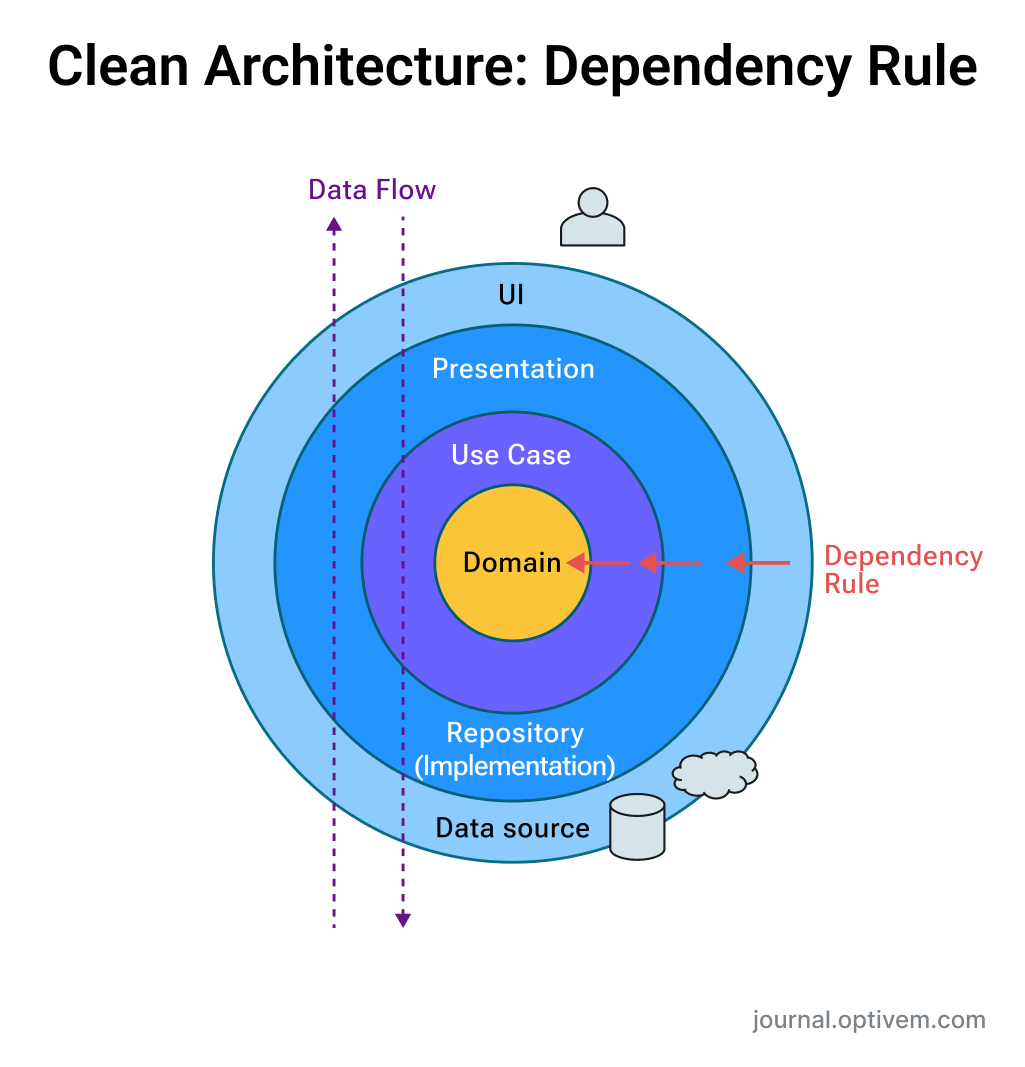
Domain entities glued to JPA annotations.
Use cases directly calling repositories.
Controllers scattered across three packages.
I thought: “How is anyone supposed to change this without breaking everything?”
Dependencies were everywhere, pointing the wrong way. Every small change became a massive headache.
The Daily Pain
Changing a business rule? Better hope no one touched your domain logic with a framework dependency.
Writing a test? Say hello to spinning up DBs, mocking everything, or manually handling try/catch just to check if something works.
Refactoring? One wrong move and the system falls apart.
I realized: if your core logic depends on infrastructure or frameworks, everything else becomes fragile.
What Does “Depend” Mean?
You’ve got a dependency anytime you:
Import a class
Call a method
Reference a concrete implementation
Require a framework to compile
Red flags I see all the time:
A use case importing Spring annotations ❌
Domain entities referencing ORM ❌
REST controllers sneaking into inner layers ❌